
Among the cities that have fully implemented their projects are Agra, Varanasi, Madurai, Coimbatore, Udaipur, Pune, Surat, and Vadodara

Seafood is one of India's largest agricultural exports after basmati rice and buffalo meat.
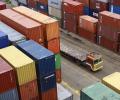
The US Trade Representative noted that India's average applied tariff rate stood at 17% per cent, the highest of any major world economy.

Uttar Pradesh, Gujarat and Odisha budgets maintain revenue surpluses despite welfare schemes while Rajasthan and West Bengal face high debt, fiscal deficits and low capital outlay.
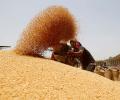
Wheat production during the current season is expected to be better than last year provided the weather remains favourable over the next few weeks, said senior industry executives. The weather had turned uncharacteristically hot in the latter half of last month, but owing to strong winds, the chill has returned in the last few days.
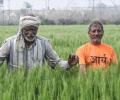
'Rainfall does not appear to have a statistically significant impact on foodgrain production since the last few years, which contrasts with the traditional view of India's heavy reliance on monsoon rains for agriculture.'
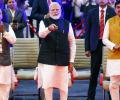
'The size of the investments is important, but equally crucial is the number of jobs that these proposals create.'
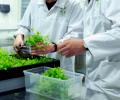
Several leading scientists, academicians, and agriculturalists have called for raising government support for research and development to make Indian agriculture future-ready.
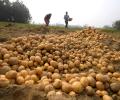
Amid the political blame game over Bengal's potato ban, which led to shortages in Jharkhand and Odisha, Uttar Pradesh farmers are the unlikely winners.

The cold wave days in December too are expected to be 'below-normal' this year.

A fresh survey to identify a minimum of eight million new beneficiaries of the flagship rural housing scheme, in addition to the 12 million already identified, will use the latest face-recognition tools to minimise gaps, a senior official said on Tuesday. The survey, which has already started across the country for building the fresh 20 million new rural houses over the next five years, can also be done by the beneficiary himself/herself as well through the Awaassoft mobile application specially created for this purpose.

Schemes like the Mukhyamantri Majhi Ladki Bahin Yojana strain fiscal resources amid rising unemployment and prices of food items.
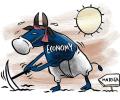
Fewer people participated in MGNREGA during the first six months of this financial year (April-September) compared to the same period last year, a recent analysis of the scheme's performance by LibTech showed.
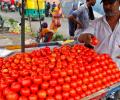
Tomato prices have been on the boil for more than a month. Data from major cities show that the spike has been between 125 and 150 per cent at the wholesale level. Soaring vegetable prices, including tomatoes, pushed the retail inflation rate to a nine-month high of 5.49 per cent in September, according to government data. Though reports say prices are expected to come down in the next few weeks after supplies improve from Madhya Pradesh and Himachal Pradesh, how long will the respite last is anybody's guess.

Four big global companies - Bayer, GenZero (a wholly-owned arm of financial major Temasek), Shell and Mitsubishi - have decided to scale up their carbon credit programme in nine states to empower farmers. The credits are generated through the adoption of smart agriculture practices - Alternate Wetting and Drying (AWD) and Direct Seeded Rice (DSR). Since over a year, the project, which was being run on a pilot basis, has positively impacted 10,000 farmers, covering more than 25,000 hectares.
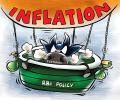
Amid a debate on the basis of a monetary policy stance, one may be curious enough to know how non-food retail inflation has behaved over the years in India. Let the eager souls catch a glimpse of facts. In the past 10 years, non-food inflation came down below 4 per cent on two occasions - pre-Covid period of 2019-20 and now in the first four months of the current financial year (FY25).
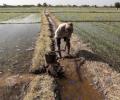
Gross Value Added (GVA) growth in agriculture and allied activities in the first quarter of the 2024-25 financial year (Q1FY25) dipped to 2.7 per cent at constant prices from 4.2 per cent in Q1FY24 due to a drop in output of some crops following heatwave in the main growing months. Low post-monsoon rains, which dried most of the reservoirs in several states across the country, also impacted the production of many crops. At current prices, the growth was estimated at 8.5 per cent as against 4.1 per cent in Q1FY24 due to a spike in food inflation during the April to June months of FY25.

International Monetary Fund (IMF) Deputy Managing Director (MD) Gita Gopinath has condemned the "terrible and disturbing" incident of rape and murder of a trainee doctor in Kolkata. "Personally, it is terrible to have any event of this kind. It is disturbing," she told Business Standard in New Delhi.

With cotton still figuring in the list of commodities that are produced using practices such as child labour, the Confederation of Indian Textile Industry (CITI) has entered into an understanding with the International Labour Organisation (ILO) to create awareness, share technical know-how and knowledge about better labour standards. These standards, which are part of ILO Fundamental Principles and Rights to Work (FPRW), will be tried on a pilot basis in major cotton-growing districts of Madhya Pradesh for one year starting in 2024.

'Given our turbulent neighbourhood, the prime minister is likely to emphasise on democratic dividend as the reason behind India's continuous prosperity.'
 © 2026 Rediff.com - Investor Information - Advertise with us - Disclaimer - Privacy Policy - Sitemap - Feedback - About us - Terms of use - Grievances